We will send you an email to reset your password.

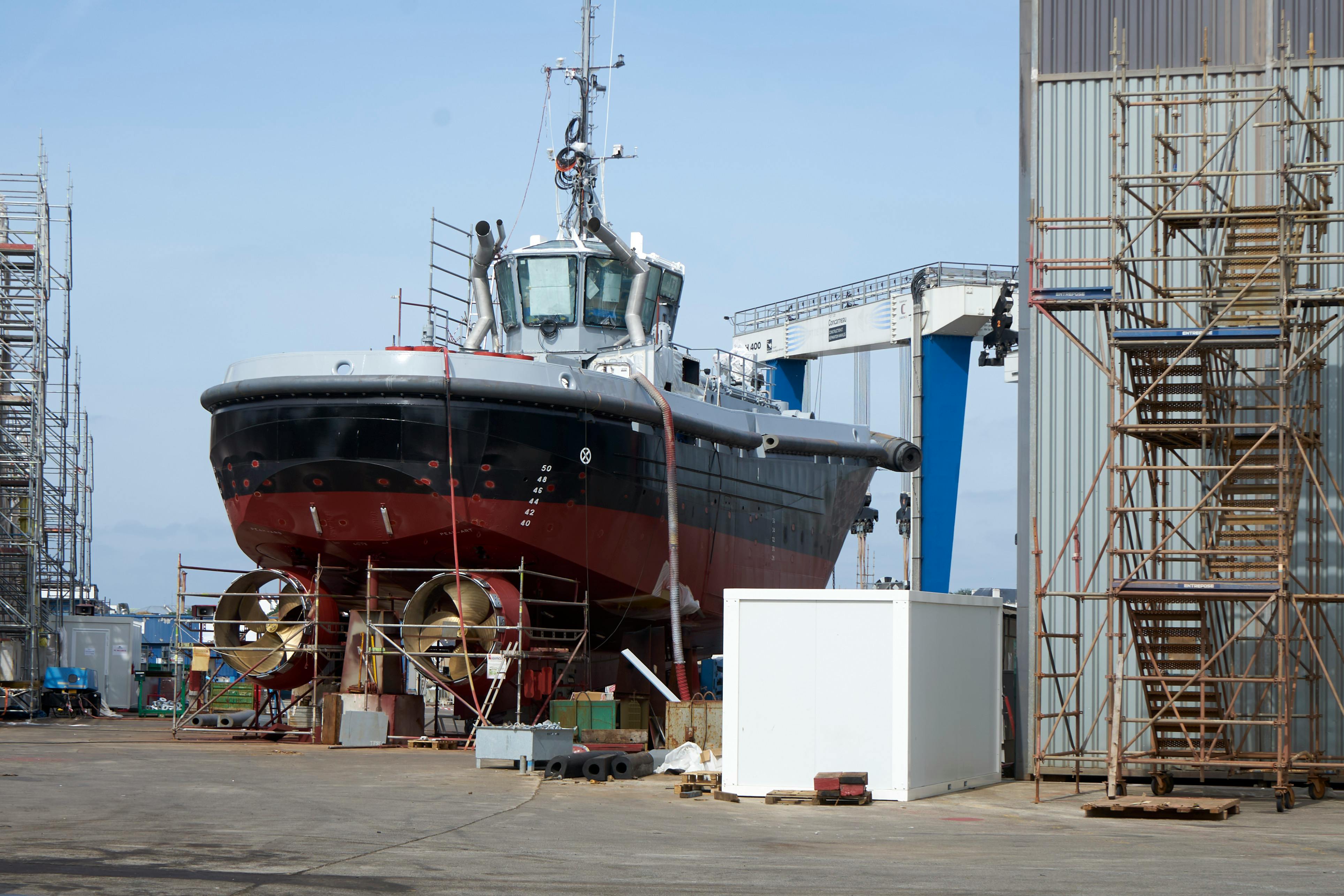
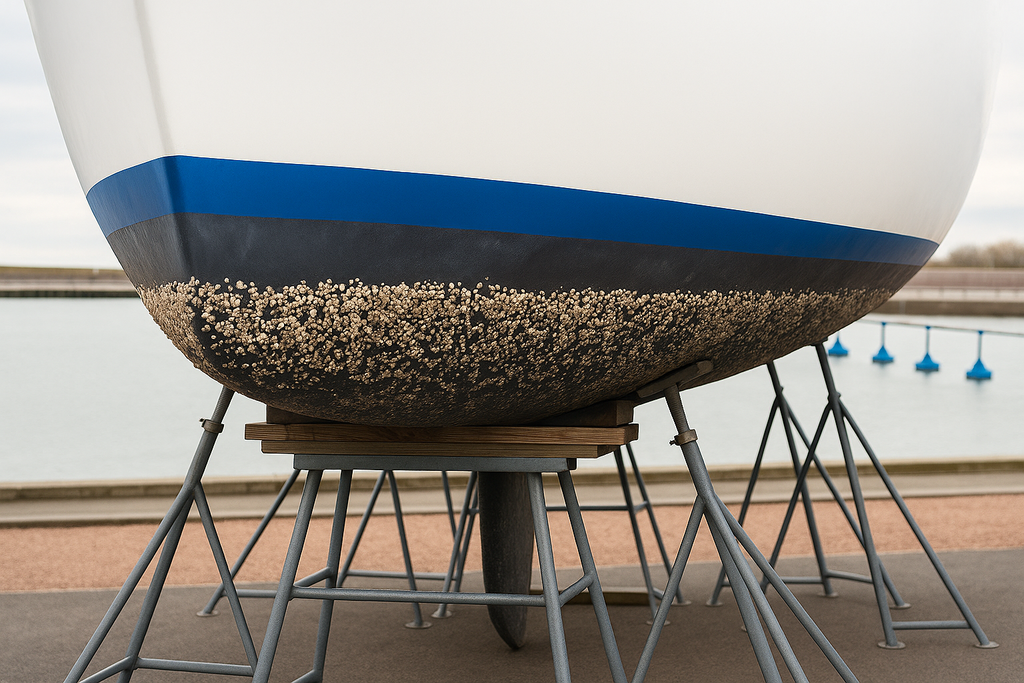
Antifouling refers to specialized coatings applied to boat hulls and underwater surfaces to prevent biofouling, the unwanted build-up of algae, barnacles, mussels, slime, and other organisms. Without it, fouling can:
• ↑ Increase hull drag by up to 60%, reducing speeds by ~10%, and hike fuel consumption by ~40% to compensate
• Damage performance: barnacles can warp hulls, disturb propellers, and degrade handling.
• Spread invasive species as creatures latch onto hulls in one region and detach in another.
• Promote corrosion by trapping moisture and microbes against metal surfaces.
Antifouling coatings are thus critical for efficiency, safety, environmental protection, and cost-saving in both commercial shipping and recreational boating.
The Science Behind Antifouling Coatings
1. Platinum-standard biocide paints
Most marine antifouling paints use biocides—toxic compounds like cuprous oxide or zinc pyrithione. These are released slowly through:
• Ablative (soft) coatings: wear off gradually, continually exposing fresh biocide.
• Hard coatings: biocides leach slowly through a porous matrix
These prevent settlement or kill organisms on contact. Traditionally, tributyltin was used banned in the 1980s due to severe environmental damage but today’s paints rely mainly on copper-based biocides, still effective but flagged for localized pollution concerns.
2. Self-polishing copolymers (SPCs)
Seajet’s lines (e.g. 034 Emperor, 039 Platinum, 033 Shogun) use SPC resins engineered to gradually smooth and wear, maintaining a smooth surface while continuously eroding to expose fresh biocide. They offer sustained protection across a season or more.
3. Biocide-free foul-release coatings
Seajet’s Bioclean Eco and 021 EKO dip into non-toxic strategies:
• Bioclean Eco: silicone-based, hydrophobic surface prevents attachment; fouling is washed off with movement or rinsing
• 021 EKO: resin that erodes ‘like soap’, shedding fine layers to prevent colonization completely biocide-free.
4. Biomimicry & texture-based coatings
Emerging tech mimics natural antifouling strategies like shark skin patterning to deter adhesion via micro-topography, reducing biofilm settlement by up to ~77%.
Application & Maintenance Best Practices.
Based on Seajet guides and expert tutorials:
1. Prepare: Clean hull, remove previous antifoul, patch prime bare areas
2. Safety first: Use PPE and only apply in well-ventilated or outdoor spaces.
3. Coat correctly: Use suitable rollers (mohair) and measure wet-film thickness (~120–150 µm) with proper gauges
4. Multicoat: Apply 2–3 coats, especially in high-drag zones (keel, rudder, bow).
5. Mask and peel for a clean finish, then allow to cure fully before relaunch
6. Dispose responsibly: Collect waste, avoid discharge into water—biocides are environmental hazards

Seajet’s Antifouling Solutions
Seajet 034 Emperor – High-performance self-polishing for multi-support (GRP, aluminium), ideal in heavy-fouling zones .
Seajet 039 Platinum – Premium SPC paint for blue-water cruising, top-tier fouling defence .
Seajet 033 Shogun – Optimized for slime/weed in high-fouling areas at speeds up to 40 kn .
Seajet 031 Samurai – Value SPC paint for moderate fouling on GRP, wood, steel .
Seajet Bioclean Eco – Silicone foul-release, non-biocidal, easy DIY application .
Seajet 021 EKO – Innovative biocide-free “soap-like” coating erodes layers to stay foul-free .
Environmental Considerations
While copper-based coatings are effective, they risk polluting marinas with persistent metals that harm aquatic life, accumulating in sediment and food chains. Copper bans in some regions, and closed-loop hull cleaning, aim to mitigate these effects. Innovations like Seajet’s Eco and EKO lines show promising eco-friendlier paths.
Conclusion
Antifouling paints are indispensable for marine efficiency, durability, and environmental protection. Seajet's range from heavy-duty SPCs to non-toxic foul-release systems, offers tailored solutions:
• Intensive exposed boating? Go with Emperor, Platinum, or Shogun.
• Moderate use? Samurai offers value and reliability.
• Eco-conscious sailors? Opt for Bioclean Eco or 021 EKO.
Choose based on your environment, usage, and environmental priorities. Effective application and responsible disposal complete the antifouling cycle, for cleaner seas and smoother sail.